IN MATEL – Tale of Gianpiero Delmati
IN MATEL
“ONCE THERE WAS A KING WHO...”
Tale of
Gianpiero Délmati
Clong hair covering shoulders, light brown color. He walked briskly along the only street, little more than a path, which led out of the village. The hammer blows on the anvil, given by the blacksmith intent on shaping horseshoes, they reached her ears, causing her discomfort. The bread and cheese that he had enjoyed that morning, watered with of milk as soon as it was milked it gave her a feeling of satiety. All around the animosity of the small medieval village breathed that gray November air, when the plain exuded its morning fog. Dawn had begun, but she was so pale that it reminded her of the dim light of a lantern placed in the stables; that light was made opaque by the natural veil that enveloped everything that morning. Matelda was on her way to the small Abbey on a steep hill a few leagues away village. Ora, the hammer blows, with distance, they had faded, muffled by the fog until the echo ceased. L’abate Martin, superior of the abbey, he had sent for her. The chimes of the Ave Maria had been ringing for some time, reminding the countryside to start the new day with a prayer. Life at village farmer passed slowly and calmly, thanks to the peace made by the Duke with the enemies bordering the fiefdom linked to him and, no sounds of war had been heard for some time. The uninterrupted work in the fields had borne fruit. The harvests of the summer as well as the autumn had been abundant and the villagers would have faced hunger during the cold and unproductive season; even the livestock had ensured its needs until the new Spring. It was hard, in ogni caso, medieval life in a village. Matelda adjusted her long dress tied around her waist, weighed down by the cloak borrowed from his brother Lasco, he shuffled through the swamp of the last rain that had fallen because it had left mud on the path that led to the hermitage. He knocked three times on the sturdy door of the abbey before one of the friars answered the door. Let her in, she was ushered into a waiting room. Matelda was beautiful. Mother Nature had given her an "aristocratic" beauty and acumen, despite being a peasant extradition. It did nothing for her rosy skin, if not to wash yourself with the running water of the flowing stream, laughing, behind the house made of wood and straw where he spent his daily life. He drew from the stream every day for the family's needs, of a cow and a pig the only wealth possessed. His bright face, embellished with green eyes like gems, it flaunted its oval and regular shape. The body, which could be seen under the heavy raw wool tunic made with his own hands, it allowed us to imagine its perfect forms. At eighteen Matelda could be defined as a flower of a girl, the most beautiful of the little ones village and justified pride of his family. While he waited, sitting, she had the opportunity to observe her surroundings. In addition to the wooden bench that housed it, there was a stone fireplace with a blazing fire, a large Crucifix also in dark wood placed in front of the bench; and a small window barred with a wrought iron grate. the girl was tense, since she did not know the reason why the abbot had summoned her. He just had no idea and, that is, it made her anxious. An Abbot of an Abbey was a notable figure, representative and powerful; for this reason it must have been a very important thing. The fire in the fireplace spread a pleasant warmth which helped Matelda to shake off the humidity absorbed during the journey made to reach this place. She had walked for over an hour in a gloomy dawn in which the fog had soaked her clothing with humidity. to ease his mood, he uttered a prayer between his lips “… Hail Mary Mater Dei “… the prayer was in Latin, as was customary in those times. Shortly after he heard a noise: a horse's hooves on the cobblestones inside the sacred place. From the noise it was clear that the animal was walking and, soon after, in the courtyard in front of the room where he was waiting. Intrigued, she listened, but he did not perceive any words, only the sound of footsteps. the window was placed too high to be able to use it. He resigned himself. Some more time passed, maybe an hour. The same friar who had opened the sturdy door entered for her with a bundle of wood which he placed on the fireplace fire to revive it.; he did not utter a word, not even the mention of a question from Matelda, but he placed his index finger on his lips as a sign of silence, and went out. Still more time passed during which the hammer bells rang eight times. now the bundle of wood was almost entirely devoured by the fire, heating the room, but her heart no longer received this warmth, he was numb with anxiety. …”Hail Mary Mater Dei” … As his lips murmured, the small door of the room opened. Abbot Martin showed up wearing a jute scapular habit and a large wooden crucifix hanging from his neck on a rough rope., occupying the center of the chest. To the white beard, the right tonsure e, Matelda noted, their unprotected feet wearing only a pair of sandals. but the eyes were inquiring. The girl knelt, kissing the friar's hands. He motioned for her to sit down while he, remaining standing, I speak. He stated that the noble Lapo, Duke Ulrich's only grandson and heir, having noticed her one day drawing water from the stream, he had fallen in love with that beautiful, rosy peasant girl, and he wanted to get married to her, even if for his noble house this fact was quite particular. But Lapo was madly in love. Even more, he had a certain influence towards his ruling uncle, earned in the battles won that led to peace. So he took his decision for granted. She remained petrified; he blushed... then he remembered that in the past summer season, he had seen the Duke. One day a group of riders trotted past while she was intent on the stream and she noticed one, among these, with regal bearing, with clothes of high quality and a shine that only a very high quality fabric could release. And he understood that it must be a high-ranking personality, since he also noticed, who rode in the center of the group, and the others covered the role of possible defense. The knights paused for a moment, uttering some words incomprehensible to her. Her pride allowed her to look at them openly. Shortly afterwards they spurred the horses into the green and sunny countryside. Abbot Martin brought her back to the present, strongly advising her to accept the opportunity and prepare for the meeting with the noble Lapo who, in a few moments, he would have crossed the threshold of that room to meet her and have her yes directly from her lips, without conditions. She also had to consider that the The will of God it was this, and there was no need to escape. Only in this way would he completely change his petty life in a radical way, leaving forever the village for a life at court, rich in education, of noble customs, of jewels and… a princess in short! It was at that point that Matelda remembered the fairy tales her mother told her when she was little, while he was spinning , in winter, the wool with the spindle, and that they always started like this: "Once upon a time there was a king who..." And it was in that instant that the girl's popular and peasant wisdom took over . Matelda thought she couldn't live as the wife of a man for whom she felt nothing; without knowing anything about him except his power and riches. Do not ! The happiness she was looking for could have been elsewhere, even without comforts and luxury. He looked Abbot Martin straight in the eyes and pronounced his firm renunciation. The religious man was somewhat surprised and thought: “These pagans don't even fear the "God's Will", while Matelda suddenly headed for the exit, leaving that warmth that had temporarily warmed her, to take while running, the path now clear of fog and which would take her back down to the village in his house of wood and straw, by the beloved laughing stream.
Gianpiero Delmati
First publication date 16 January 2022
with 898 views
at the date of 2 Aprile 2023

Advertising


Slider
-
Conferences in the Council Hall of Corteolona
-

THE LOVE OF ITALO AND PIAZZETTA DR. ITALO RICHICHI IN CORTEOLONA poem by Angela Battaglia
-
Spring story - by Lena Russino
-
Editorial Director Gianfranco Russino from Sant'Orsola Terme
-
It was like that water evaporating in the middle of the sky - story by Angela Battaglia
-
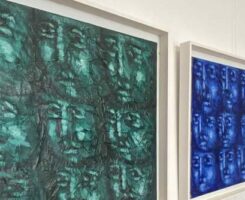
Xante Battaglia - Exhibition in Milan - Ian Art Gallery
-
Cormorants posing for Francesco Perri
-
The beats - poem by Angela Battaglia
-
COMUNICAZIONEEFORME - Marzo 2024
-
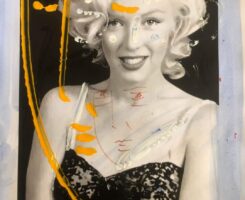
ANTHOLOGICAL EXHIBITION OF XANTE BATTAGLIA IN PAVIA
-
HAPPY VALENTINE'S DAY 2024
-
Marriage 31 October 1968
-
The contracts - The missing mirror and the missing table
-
In - Los Angeles beach
-
Whatsapp on the Sanremo festival and screenshots